How to read a notification and its full breakdown
Read the metric, pair, venue and time, open the context and compare event and current prices.
Start with the card
A screener notification arrives. Should you open the chart immediately, or first check what actually happened? Start with the card: which screener found the match, which coin it concerns and which venue supplied the data. Then open the details and check the time. This short sequence helps you understand the match before reviewing it on a chart.
Read the right metric
In this example, the price screener found a four-percent rise over five minutes. That is a price change over the stated interval, not a trade result. On an open-interest notification, the main number describes the change in open interest. Other screeners can show a different metric again. Read the screener name and the number's label first. Then check the pair and venue. The same ticker on different venues does not guarantee identical values or trading conditions.
Open the full breakdown
Open the full breakdown. Start with the search condition and the observed change, then review the additional data available on this card. Daily turnover, for example, adds context about the pair, but it does not replace checking the current spread and order book. Read each metric together with its label and period. Cards do not all contain the same set of data. If a field is missing, that does not mean its value is zero. The breakdown helps you understand the match and decide what to examine next.
Event price and current price
The notification shows a price of one hundred and four, but the chart you open later shows one hundred and three. First, compare the time, venue, pair and market type. The notification's price belongs to the recorded event. The chart quote may have changed since then, and a different venue may have shown another value from the start. A price difference alone does not measure delivery time. Checking a delay requires timestamps for both the event and its receipt. One price cannot establish the cause.
Repeats and the next step
If the card includes repeats, review their count and the time of the latest match. Several notifications may relate to one continuing move. Do not treat every repeat as a separate, independent event. Now open the coin page or the relevant chart and review what happened before the observed change. Follow this order: screener and metric, pair and venue, time, full breakdown, then chart. The notification reduces manual searching, while the next assessment remains yours.
More videos
 2:54
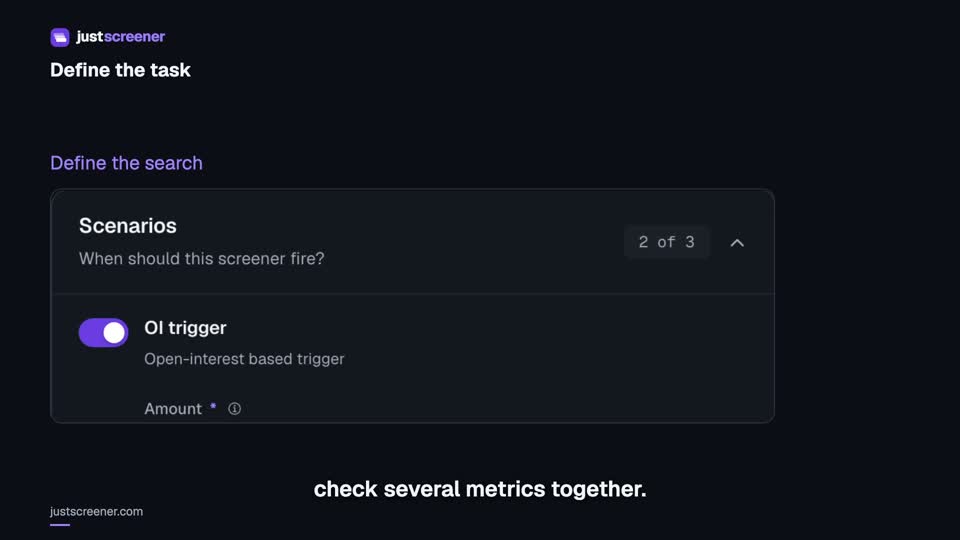
Custom conditions: combine your search rules
Combine price, open interest and turnover conditions: threshold signs, analysis windows, filters and repeats.
Watch video →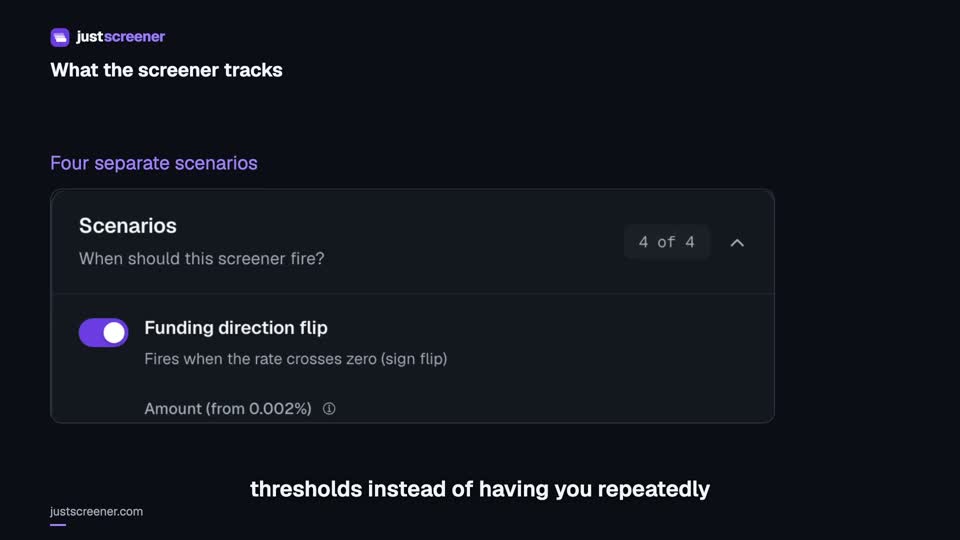 3:33
Complete funding screener setup
Four funding scenarios: thresholds, sign changes, cross-exchange spread, intervals and filters.
Watch video →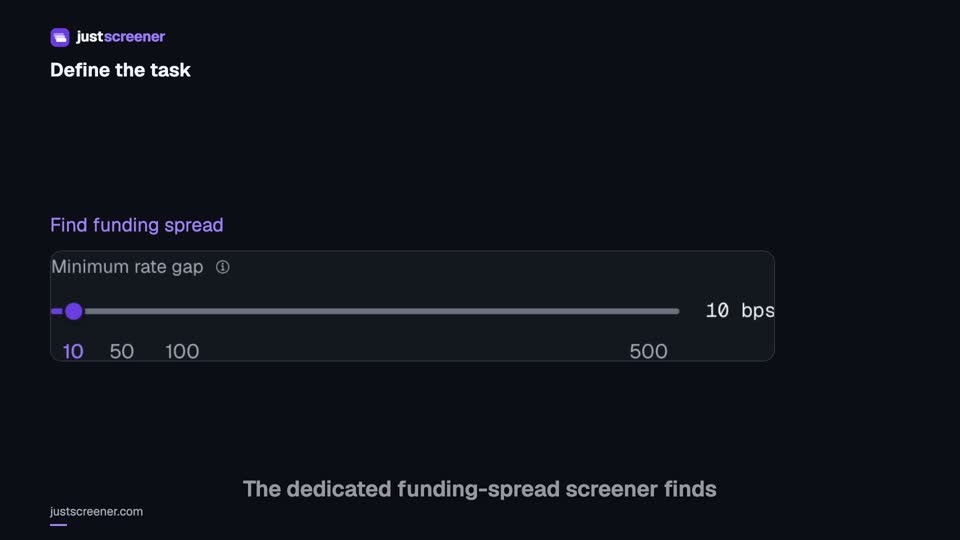 3:20
Complete funding spread screener setup
Basis-point thresholds, spread stability, the pair universe and per-coin cooldown.
Watch video →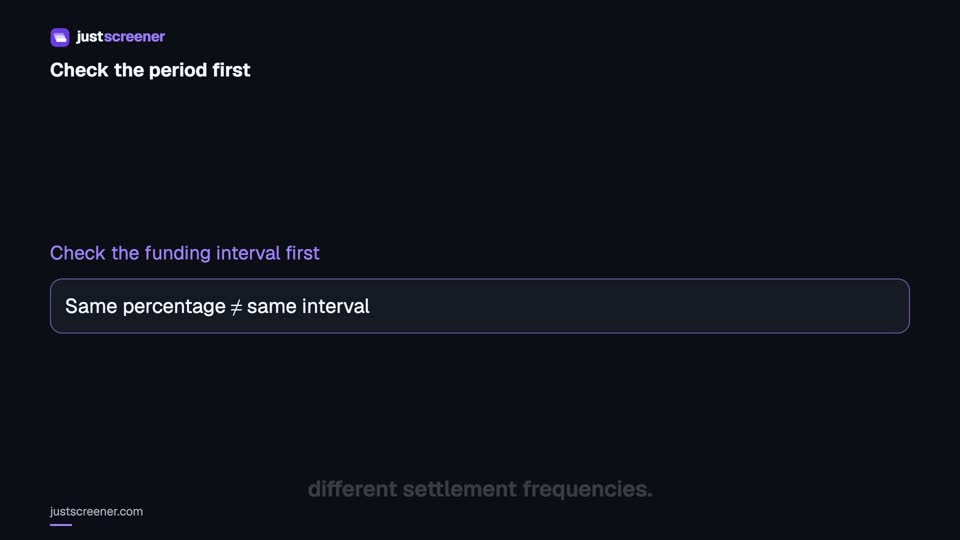 2:36
Funding: compare different intervals
Eight-hour normalization, unknown intervals and funding calculator assumptions.
Watch video →


